6 Balance Exercises for Seniors That Help Prevent Falls
Falls are the leading cause of injury-related hospitalisation in adults over 65, and roughly one in three people over 65 falls each year. The encouraging news is equally well established: falls are largely preventable, and the single most effective tool is exercise.
The evidence here is unusually strong. A Cochrane review of 108 randomised trials involving more than 23,000 older adults found, with high certainty, that exercise programmes reduce the rate of falls by around a quarter. Programmes that specifically challenge balance, done consistently at a higher dose, have achieved reductions approaching 40%. The programmes that work best involve balance and functional exercises, often combined with strength training.
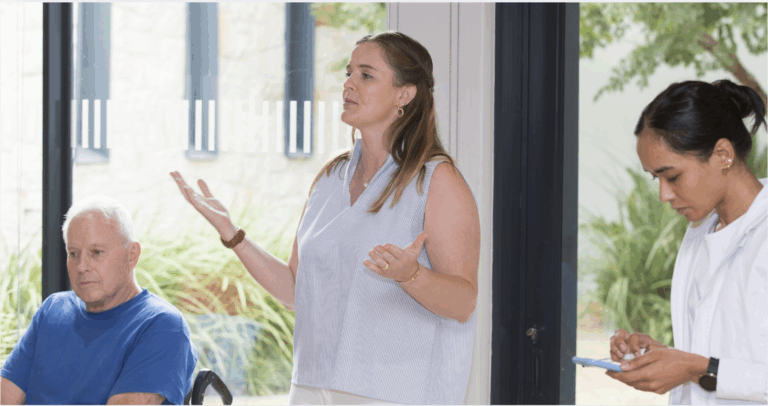
Before you begin: consult your doctor or biokineticist before starting a new exercise programme, especially if you have osteoporosis, a history of falls, or balance concerns. If you experience dizziness, pain or shortness of breath, stop and seek medical advice. Oasis Life works with Samantha Knobel. Known to Oasis Life residents as Sam, she is a lead biokineticist, practice owner, and the founder of Wellness Redefined, specialising in injury rehabilitation, chronic pain management, and physical performance enhancement through scientific exercise interventions.
The six exercises below need no equipment. Use a sturdy chair or counter for support where needed, and quality beats quantity every time.
Oasis Life works with Samantha Knobel, a lead biokineticist, working alongside residents across our estates.
1. Heel-to-Toe Walk
Walk in a straight line, placing your heel directly against the toe of your other foot with each step, as if on a tightrope. Keep your eyes ahead, not down. This improves balance and spatial awareness. Aim for ten to twenty steps, near a wall or counter at first.
2. Single Leg Stand
Using a chair for light support, lift one foot and hold for 10 to 30 seconds per side. This builds the ankle and hip stability that prevents stumbles from becoming falls. As it gets easier, lighten your grip on the chair to fingertips, then hover.
3. Sit to Stand
With arms crossed over your chest, stand up from a chair and lower back down slowly without using your hands. This strengthens exactly the muscles needed to rise from a chair, or to recover from a fall. Start with five repetitions and build to ten or more.
4. Calf Raises
Holding a chair, rise onto your toes, hold for two seconds, then lower slowly. This strengthens the lower legs for walking on uneven surfaces, one of the most common fall scenarios. Ten to fifteen repetitions.
5. Sideways Stepping
Step side to side with slightly bent knees, leading with one foot and bringing the other to meet it. Most balance training happens front-to-back; this trains the lateral stability that prevents sideways falls, which are the ones most likely to cause hip fractures.
6. Wall Push-Ups
Stand at arm’s length from a wall and perform standing push-ups against it. This builds the upper body and core strength to catch yourself if you do lose balance. Ten repetitions, keeping the body in a straight line.
How Often, and What Next
Consistency matters far more than intensity. The research suggests the strongest results come from balance-challenging exercise done regularly over months, ideally two to three hours a week across sessions. A few minutes daily beats a long session once a week.
These exercises are a starting point, not a ceiling. Structured options multiply the benefit: tai chi has particularly strong fall-prevention evidence, and supervised programmes add strength work safely. At Oasis Life estates, the Wellness Redefined programme, delivered by a registered biokineticist and her team, includes dedicated balance and fall-prevention classes such as Strong Foundations, designed for those managing muscle loss, balance challenges or diagnosed osteoporosis. Contact your Clubhouse concierge for the current schedule.
Balance is not something you have or don’t have. It is something you practice. And unlike most things worth having, it responds within weeks.
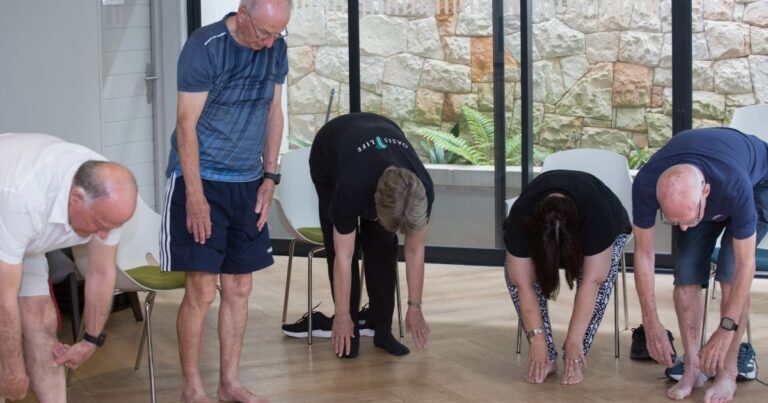
Residents at Oasis Life Clara Anna Fontein participating in just one of multiple programmes under the leadership of Sam and her team
There is a reason the pool is where so many people rediscover exercise after years away from it, or after a joint replacement, or mid-way through an a...
Falls are the leading cause of injury-related hospitalisation in adults over 65, and roughly one in three people over 65 falls each year. The encourag...
It doesn’t look like exercise. That, it turns out, is the whole point. Arms rise and fall. Weight shifts. Breath follows movement. To the uninitiated,...
When the legendary Vanity Fair editor Graydon Carter was asked for the key ingredient of a successful career, a room full of media insiders leaned in ...
Some decades ago, author and speaker Marianne Williamson shared an insight that captured the mind-body connection with unusual precision. “I realised ...
It doesn’t take a special qualification to know that supplements and systems promising wellbeing and longevity are in high demand. The evidence is on ...
The most significant longevity discovery of the past two decades did not come from a laboratory studying genetics, nutrition or exercise. It came from...
There's a kind of clarity that only comes from having lived fully. From building things, raising people, making decisions, and — eventually — recognis...
Why Retirement Is Being Redefined — And What People Are Choosing Instead
We are currently witnessing one of the most profound transformations in huma...
Inside the Oasis Life Sunningdale Clubhouse: Designing Retirement for Community
The Clubhouse at Oasis Life Sunningdale makes its intentions clear fr...
Rethink Your Reality: Why Lifestyle Trumps Genetics in Life’s Third Act
We often hold onto rigid, outdated ideas about how the ageing process works, ...
Playing Your Cards Right at Oasis Life: Can Games Really Boost Brainpower?
At Oasis Life, we’ve long believed that the small, daily rituals of commun...
Why Growth Doesn’t Expire With Age
From novelists and painters to scientists and entrepreneurs, history is filled with people who came into their own...
What Your Retiring Parents Really Need From You Now
When Rabie Property Developers started to build the Oasis Life retirement brand, looking at local...
What Nobody Tells You About Retirement Happiness
Before we launched Oasis Life, we chose to listen—to the stories of retirees and to the global resea...
Do Your Genes Really Decide Your Health?
For decades, we’ve blamed genetics for everything from heart disease to how long we’ll live. “It runs in the...
Rethinking What It Means to Age Well
The conversation around aging is shifting — and retirement lifestyle is at the heart of that change. For too lon...
Unretirement: Why More Residents Are Redefining Retirement on Their Own Terms
For a growing number of retirees, stepping away from work no longer mea...
The Life-Altering Magic of Daily Rituals for Wellbeing
From daily meditation, prayer or chanting to a coffee mug with personal significance, rituals...
The Art of Design for Feeling at Home in Retirement
At Oasis Life, design is about more than aesthetics — it's about feeling at home in your retireme...
Jam Sessions at Oasis Life Constantia’s New Restaurant, The Townsend
Retirement Village Dining Reimagined at Oasis Life Constantia
Two chefs — and o...
Achieving Financial Independence Earlier: Insights into The FIRE Movement
The FIRE (Financial Independence, Retire Early) movement has become a power...
Let’s Talk Life Right Levies at Oasis Life
In traditional retirement villages and property complexes, monthly levies can feel like a mystery, and a g...
Rethinking Retirement Income: The Bucket Approach
In this next era of retirement, the goal is no longer accumulation — it’s optimisation. Time, freed...
Retirement Isn’t a Deadline — It’s a Design Brief
How Oasis Life is Reshaping South Africa’s New Retirement Reality
We’re living longer than ever be...
At a certain stage in life, many South Africans start thinking about where — and how — they want to live next. And often, that brings up a big word: d...
Embrace the Art of Reinvention in Retirement
Ageing is inevitable. But growth? That’s a choice. At Oasis Life, we believe retirement isn’t a destinat...
Key Trends Redefining Aging in Place for Modern Retirement
Discover the senior healthcare trends shaping aging in place for a modern retirement, from...
Smart Retirement: Matching Your Lifestyle to Your Life Stage
Right-Sizing for the Life You’re Living Now
Let’s be honest — many of us reach retireme...
Oasis Life Breaks Ground in Sunningdale – A New Retirement Village in Cape Town
We’re excited to share that construction has commenced at Oasis Life...
Retire with Companionship: Embrace Pet-Friendly Living at Oasis Life
At Oasis Life, we understand that pets are more than just companions—they’re par...
Planning for Secure, Luxury Retirement Living in South Africa Starts Here
Living longer is one of modern society’s great achievements. But as South ...
The Psychological Benefits of Living in a Connected and Active Senior Community
As we enter retirement, it’s easy to focus on the practical aspects—d...
Revolutionising Retirement: The Future of Senior Living Is Here
The senior living industry is evolving at a remarkable pace, and South Africa is no e...
The New Retirement Reality: Why Life Rights with Oasis Life Make Sense Now More Than Ever
Retirement in South Africa is shifting. The traditional not...
One Family’s Journey to Oasis Life Constantia
Retirement is a significant life transition, not just for those moving into a retirement village but al...
15 Ways to Add More Adventure to Your Life in Retirement
Science reveals that embarking on an adventure can make us feel more alive and connected, tr...
A Modern Retirement Chapter Begins at Oasis Life Constantia
A new chapter is unfolding for eager residents making Oasis Life Constantia their new hom...
Comprehensive estate and tax planning is essential to preserve and transfer wealth across generations, particularly when you’re retired in South Afric...
Oasis Life is coming to Sunningdale. Nestled along the Cape’s stunning Western Seaboard, this exceptional location offers seniors a wealth of health b...
Life's Third Age, introduced by gerontologist and psychologist Dr. Ken Dychtwald, begins around retirement age and extends into the 80s and beyond. Th...
Linda and Gerard Oliver have spent a lifetime together, nurturing their marriage, raising three children, and deeply embedding values like transparenc...
In an exclusive interview with Ludick and Helena Janse van Rensburg, who moved to Oasis Life Clara Anna Fontein in March 2022, we spoke about their re...
A Ripple Spring 2023 article
1. EXPRESS GRATITUDE
Extensive research finds that regularly practicing gratitude increases optimism, promotes a positi...
A Ripple Spring 2023 article
Friendship is one of the sweetest parts of being human, providing a deep well of love, community, and nourishment for bo...
A Ripple Spring 2023 article
I “retired” in April 2020 at the start of the Covid-19 lockdown, after a career in financial services, healthcare, and b...
A Ripple Spring 2023 article
[/vc_column_text][vc_empty_space][vc_column_text]As Spring greets us in the Western Cape, we start enjoying warmer weath...
A Ripple Autumn 2023 article
Clara Anna Fontein, situated at the foothills of Durbanville and with panoramic views that will take your breath away, s...
A Ripple Autumn 2023 article
[/vc_column_text][vc_empty_space][vc_column_text]“We proudly present Oasis Life Constantia, Rabie's third secure retirem...
A Ripple Autumn 2023 article
Retirement is a time to relax and enjoy life, but it can also be a time when you find yourself needing additional income...
A Ripple Autumn 2023 article
Choosing an executor is an important decision when creating a will or trust. The executor will be responsible for handli...
A Ripple Autumn 2023 article
[/vc_column_text][vc_empty_space][vc_column_text]In 2013, the Rabie Property Group commenced with the planning of a worl...
A Ripple Autumn 2023 article
Oasis Life Burgundy Estate continues to grow with over 100 concluded sales to date with residents enjoying the lifestyle...
“We proudly present Oasis Life Constantia, Rabie's third secure retirement estate in the beautiful Western Cape,” says Mariska Auret, Director at Rabi...
A Ripple Summer 2022 Article
A beautiful, sumptuous Christmas lunch or Christmas Eve dinner is a very important occasion in most calendars. It’s dif...
A Ripple Summer 2022 article
2022 - A Year in Review. We look back at 2022 at Oasis Life and what our management team is looking forward to in 2023.
...
We're celebrating Spring and new beginnings, and we would love to share it with you! You're invited to experience a taste of the exceptional lifestyle...
A Ripple Winter 2022 article
For the Ripple Book Club this Winter, we selected the latest release books for you to cosy up to from novels to gripping...
A Ripple Winter 2022 article
“What am I supposed to do with the rest of my life?” is a question we all ask ourselves at some point and perhaps severa...
A Ripple Spring 2022 article
Love doesn’t die with death. Love is like liquid; when it pours out, it seeps into others’ lives. Love changes form and ...
A Ripple Winter 2022 article
You might not like to be called a “pensioner”, because face it, you will be forever young, but when it comes to saving a...
A Ripple Winter 2022 article
“This was the best decision ever to relocate,” says Glenda Hon, resident. “I tell everyone who’s thinking of moving to f...
A Ripple Winter 2022 article
]In our new series of Frequently asked Questions, we hope to answer some of the questions you might have about Oasis Lif...
A Ripple Winter 2022 article
Set against the foothills of Durbanville’s hills, the secure lifestyle estate of Clara Anna Fontein has matured to 300 h...
A Ripple Autumn 2022 article
With just over a hundred residents and handovers of houses currently in progress, the luxury retirement estate within Cl...
A Ripple Autumn 2022 article
In our new series, we will look at each of the four Oasis Life Security pillars, namely Healthcare Security, Financial S...
A Ripple Autumn 2022 article
Launched at the end of October, the second phase of the secure retirement estate in Burgundy Estate is under constructio...
With all the 24 houses in the first phase sold, as well as eight of the 15 houses in phase two, construction has begun again at Oasis Life Burgundy Es...
It’s been a great year at Oasis Life with new residents joining our community throughout the year in Clara Anna Fontein and the first residents moving...
Oasis Life offers Primary Healthcare. What Does this Mean?
Our Oasis Life Clara Anna Fontein Clubhouse includes a Healthcare Suite consisting of a re...
Travel the world - from your couch! Just because you’re at home does not mean that you can’t go anywhere. If you’ve always wanted to visit some of the...
Your Retirement at Burgundy Estate
With the suburbs of Cape Town to the south, the beaches of Milnerton and Blouberg to the west, and the winelands of...
Following the run-away success of the release of our first three show houses, we are very proud to announce that our new retirement one-bedroom showho...
Without compromising on style and contemporary architecture, we carefully design our Oasis Life homes to ensure that every lay-out is practical and sm...
We successfully launched our third Oasis Life retirement development on 21 November at Burgundy Estate in Milnerton. It was great to meet several visi...
Clara Anna Fontein Successfully Launches Three Furnished Show Houses
Located on the picturesque hills of Durbanville, Clara Anna Fontein - a farm stee...
Meet the Hoteliers Behind the Hospitality Lifestyle at Oasis Life
At Oasis Life, we’re promising a resort-like lifestyle with hospitality from the top...
Asante Travel designs tailor-made experiences that submerge you in the beauty, magnificence and happiness of Africa and offer authentic, luxurious and...
Introducing our retirement homes at Burgundy Estate, Oasis Life, is set in the successful Burgundy Estate. With the suburbs of Cape Town to the south,...
Show houses loading…
The views are to die for and the calm, beautiful country setting is comparable to none. Less than 5km away from all modern amenit...
From the start, the Baby Boomer generation born between 1946 and 1964 embraced an anti-establishment attitude. Boomers came of age between two major w...
It’s no longer novel to enjoy the company of your friends on Facebook or appreciate the ease of Instagram – after all, it was a baby boomer, Tim Berne...
Oasis Life offers you peace of mind in four main areas, ensuring that all your requirements are taken care of. We want you to love your retirement and...
Conrad van der Merwe
Biokineticist specialising in fitness for mature bodies.
Conrad hails from Kimberley and qualified as biokineticist at the Univer...
Set on the rolling hills of Durbanville, our three Oasis Life Clara Anna Fontein show houses are taking shape, as well as our clubhouse. We are busy c...
What is next generation retirement?
For decades 65 was the typical retirement age. Starting in their early fifties, but certainly by age 70, people w...
The first thing that strikes you about Clara Anna Fontein is the vast open space. Panoramic views of cascading hills as far as the eye can see, with t...
Providing an Optimal Investment Strategy into Retirement
A legacy means different things to different people. To some of us, it is leaving your childr...
Oasis Life Burgundy Estate
Located in an 80-hectare lifestyle development bordering the De Grendel wine estate, Oasis Life Burgundy Estate will combin...
There is a reason the pool is where so many people rediscover exercise after years away from it, or after a joint replacement, or mid-way through an a...
Falls are the leading cause of injury-related hospitalisation in adults over 65, and roughly one in three people over 65 falls each year. The encourag...
It doesn’t look like exercise. That, it turns out, is the whole point. Arms rise and fall. Weight shifts. Breath follows movement. To the uninitiated,...
When the legendary Vanity Fair editor Graydon Carter was asked for the key ingredient of a successful career, a room full of media insiders leaned in ...
Some decades ago, author and speaker Marianne Williamson shared an insight that captured the mind-body connection with unusual precision. “I realised ...
It doesn’t take a special qualification to know that supplements and systems promising wellbeing and longevity are in high demand. The evidence is on ...
The most significant longevity discovery of the past two decades did not come from a laboratory studying genetics, nutrition or exercise. It came from...
There's a kind of clarity that only comes from having lived fully. From building things, raising people, making decisions, and — eventually — recognis...
Do Your Genes Really Decide Your Health?
For decades, we’ve blamed genetics for everything from heart disease to how long we’ll live. “It runs in the...
Rethinking What It Means to Age Well
The conversation around aging is shifting — and retirement lifestyle is at the heart of that change. For too lon...
Rethinking Retirement Income: The Bucket Approach
In this next era of retirement, the goal is no longer accumulation — it’s optimisation. Time, freed...
Key Trends Redefining Aging in Place for Modern Retirement
Discover the senior healthcare trends shaping aging in place for a modern retirement, from...
Smart Retirement: Matching Your Lifestyle to Your Life Stage
Right-Sizing for the Life You’re Living Now
Let’s be honest — many of us reach retireme...
Oasis Life Breaks Ground in Sunningdale – A New Retirement Village in Cape Town
We’re excited to share that construction has commenced at Oasis Life...
Retire with Companionship: Embrace Pet-Friendly Living at Oasis Life
At Oasis Life, we understand that pets are more than just companions—they’re par...
Planning for Secure, Luxury Retirement Living in South Africa Starts Here
Living longer is one of modern society’s great achievements. But as South ...
The Psychological Benefits of Living in a Connected and Active Senior Community
As we enter retirement, it’s easy to focus on the practical aspects—d...
Revolutionising Retirement: The Future of Senior Living Is Here
The senior living industry is evolving at a remarkable pace, and South Africa is no e...
The New Retirement Reality: Why Life Rights with Oasis Life Make Sense Now More Than Ever
Retirement in South Africa is shifting. The traditional not...
15 Ways to Add More Adventure to Your Life in Retirement
Science reveals that embarking on an adventure can make us feel more alive and connected, tr...
A Modern Retirement Chapter Begins at Oasis Life Constantia
A new chapter is unfolding for eager residents making Oasis Life Constantia their new hom...
Comprehensive estate and tax planning is essential to preserve and transfer wealth across generations, particularly when you’re retired in South Afric...
Oasis Life is coming to Sunningdale. Nestled along the Cape’s stunning Western Seaboard, this exceptional location offers seniors a wealth of health b...
Life's Third Age, introduced by gerontologist and psychologist Dr. Ken Dychtwald, begins around retirement age and extends into the 80s and beyond. Th...
Linda and Gerard Oliver have spent a lifetime together, nurturing their marriage, raising three children, and deeply embedding values like transparenc...
In an exclusive interview with Ludick and Helena Janse van Rensburg, who moved to Oasis Life Clara Anna Fontein in March 2022, we spoke about their re...
A Ripple Spring 2023 article
1. EXPRESS GRATITUDE
Extensive research finds that regularly practicing gratitude increases optimism, promotes a positi...
A Ripple Spring 2023 article
Friendship is one of the sweetest parts of being human, providing a deep well of love, community, and nourishment for bo...
A Ripple Spring 2023 article
I “retired” in April 2020 at the start of the Covid-19 lockdown, after a career in financial services, healthcare, and b...
A Ripple Spring 2023 article
[/vc_column_text][vc_empty_space][vc_column_text]As Spring greets us in the Western Cape, we start enjoying warmer weath...
A Ripple Autumn 2023 article
Clara Anna Fontein, situated at the foothills of Durbanville and with panoramic views that will take your breath away, s...
A Ripple Autumn 2023 article
[/vc_column_text][vc_empty_space][vc_column_text]“We proudly present Oasis Life Constantia, Rabie's third secure retirem...
A Ripple Autumn 2023 article
Retirement is a time to relax and enjoy life, but it can also be a time when you find yourself needing additional income...
A Ripple Autumn 2023 article
Choosing an executor is an important decision when creating a will or trust. The executor will be responsible for handli...
A Ripple Autumn 2023 article
[/vc_column_text][vc_empty_space][vc_column_text]In 2013, the Rabie Property Group commenced with the planning of a worl...
A Ripple Autumn 2023 article
Oasis Life Burgundy Estate continues to grow with over 100 concluded sales to date with residents enjoying the lifestyle...
“We proudly present Oasis Life Constantia, Rabie's third secure retirement estate in the beautiful Western Cape,” says Mariska Auret, Director at Rabi...
A Ripple Summer 2022 Article
A beautiful, sumptuous Christmas lunch or Christmas Eve dinner is a very important occasion in most calendars. It’s dif...
A Ripple Summer 2022 article
2022 - A Year in Review. We look back at 2022 at Oasis Life and what our management team is looking forward to in 2023.
...
We're celebrating Spring and new beginnings, and we would love to share it with you! You're invited to experience a taste of the exceptional lifestyle...
A Ripple Winter 2022 article
For the Ripple Book Club this Winter, we selected the latest release books for you to cosy up to from novels to gripping...
A Ripple Winter 2022 article
“What am I supposed to do with the rest of my life?” is a question we all ask ourselves at some point and perhaps severa...
A Ripple Spring 2022 article
Love doesn’t die with death. Love is like liquid; when it pours out, it seeps into others’ lives. Love changes form and ...
A Ripple Winter 2022 article
You might not like to be called a “pensioner”, because face it, you will be forever young, but when it comes to saving a...
A Ripple Winter 2022 article
“This was the best decision ever to relocate,” says Glenda Hon, resident. “I tell everyone who’s thinking of moving to f...
A Ripple Winter 2022 article
]In our new series of Frequently asked Questions, we hope to answer some of the questions you might have about Oasis Lif...
A Ripple Winter 2022 article
Set against the foothills of Durbanville’s hills, the secure lifestyle estate of Clara Anna Fontein has matured to 300 h...
A Ripple Autumn 2022 article
With just over a hundred residents and handovers of houses currently in progress, the luxury retirement estate within Cl...
A Ripple Autumn 2022 article
In our new series, we will look at each of the four Oasis Life Security pillars, namely Healthcare Security, Financial S...
A Ripple Autumn 2022 article
Launched at the end of October, the second phase of the secure retirement estate in Burgundy Estate is under constructio...
With all the 24 houses in the first phase sold, as well as eight of the 15 houses in phase two, construction has begun again at Oasis Life Burgundy Es...
It’s been a great year at Oasis Life with new residents joining our community throughout the year in Clara Anna Fontein and the first residents moving...
Oasis Life offers Primary Healthcare. What Does this Mean?
Our Oasis Life Clara Anna Fontein Clubhouse includes a Healthcare Suite consisting of a re...
Travel the world - from your couch! Just because you’re at home does not mean that you can’t go anywhere. If you’ve always wanted to visit some of the...
Your Retirement at Burgundy Estate
With the suburbs of Cape Town to the south, the beaches of Milnerton and Blouberg to the west, and the winelands of...
Following the run-away success of the release of our first three show houses, we are very proud to announce that our new retirement one-bedroom showho...
Without compromising on style and contemporary architecture, we carefully design our Oasis Life homes to ensure that every lay-out is practical and sm...
We successfully launched our third Oasis Life retirement development on 21 November at Burgundy Estate in Milnerton. It was great to meet several visi...
Clara Anna Fontein Successfully Launches Three Furnished Show Houses
Located on the picturesque hills of Durbanville, Clara Anna Fontein - a farm stee...
Meet the Hoteliers Behind the Hospitality Lifestyle at Oasis Life
At Oasis Life, we’re promising a resort-like lifestyle with hospitality from the top...
Asante Travel designs tailor-made experiences that submerge you in the beauty, magnificence and happiness of Africa and offer authentic, luxurious and...
Introducing our retirement homes at Burgundy Estate, Oasis Life, is set in the successful Burgundy Estate. With the suburbs of Cape Town to the south,...
Show houses loading…
The views are to die for and the calm, beautiful country setting is comparable to none. Less than 5km away from all modern amenit...
From the start, the Baby Boomer generation born between 1946 and 1964 embraced an anti-establishment attitude. Boomers came of age between two major w...
It’s no longer novel to enjoy the company of your friends on Facebook or appreciate the ease of Instagram – after all, it was a baby boomer, Tim Berne...
Oasis Life offers you peace of mind in four main areas, ensuring that all your requirements are taken care of. We want you to love your retirement and...
Conrad van der Merwe
Biokineticist specialising in fitness for mature bodies.
Conrad hails from Kimberley and qualified as biokineticist at the Univer...
Set on the rolling hills of Durbanville, our three Oasis Life Clara Anna Fontein show houses are taking shape, as well as our clubhouse. We are busy c...
What is next generation retirement?
For decades 65 was the typical retirement age. Starting in their early fifties, but certainly by age 70, people w...
The first thing that strikes you about Clara Anna Fontein is the vast open space. Panoramic views of cascading hills as far as the eye can see, with t...
Providing an Optimal Investment Strategy into Retirement
A legacy means different things to different people. To some of us, it is leaving your childr...
Oasis Life Burgundy Estate
Located in an 80-hectare lifestyle development bordering the De Grendel wine estate, Oasis Life Burgundy Estate will combin...
There is a reason the pool is where so many people rediscover exercise after years away from it, or after a joint replacement, or mid-way through an a...
It doesn’t look like exercise. That, it turns out, is the whole point. Arms rise and fall. Weight shifts. Breath follows movement. To the uninitiated,...
When the legendary Vanity Fair editor Graydon Carter was asked for the key ingredient of a successful career, a room full of media insiders leaned in ...
Some decades ago, author and speaker Marianne Williamson shared an insight that captured the mind-body connection with unusual precision. “I realised ...
It doesn’t take a special qualification to know that supplements and systems promising wellbeing and longevity are in high demand. The evidence is on ...
The most significant longevity discovery of the past two decades did not come from a laboratory studying genetics, nutrition or exercise. It came from...
There's a kind of clarity that only comes from having lived fully. From building things, raising people, making decisions, and — eventually — recognis...
Why Retirement Is Being Redefined — And What People Are Choosing Instead
We are currently witnessing one of the most profound transformations in huma...
Inside the Oasis Life Sunningdale Clubhouse: Designing Retirement for Community
The Clubhouse at Oasis Life Sunningdale makes its intentions clear fr...
Rethink Your Reality: Why Lifestyle Trumps Genetics in Life’s Third Act
We often hold onto rigid, outdated ideas about how the ageing process works, ...
Playing Your Cards Right at Oasis Life: Can Games Really Boost Brainpower?
At Oasis Life, we’ve long believed that the small, daily rituals of commun...
Why Growth Doesn’t Expire With Age
From novelists and painters to scientists and entrepreneurs, history is filled with people who came into their own...
What Your Retiring Parents Really Need From You Now
When Rabie Property Developers started to build the Oasis Life retirement brand, looking at local...
What Nobody Tells You About Retirement Happiness
Before we launched Oasis Life, we chose to listen—to the stories of retirees and to the global resea...
Do Your Genes Really Decide Your Health?
For decades, we’ve blamed genetics for everything from heart disease to how long we’ll live. “It runs in the...
Rethinking What It Means to Age Well
The conversation around aging is shifting — and retirement lifestyle is at the heart of that change. For too lon...
Unretirement: Why More Residents Are Redefining Retirement on Their Own Terms
For a growing number of retirees, stepping away from work no longer mea...
The Life-Altering Magic of Daily Rituals for Wellbeing
From daily meditation, prayer or chanting to a coffee mug with personal significance, rituals...
The Art of Design for Feeling at Home in Retirement
At Oasis Life, design is about more than aesthetics — it's about feeling at home in your retireme...
Jam Sessions at Oasis Life Constantia’s New Restaurant, The Townsend
Retirement Village Dining Reimagined at Oasis Life Constantia
Two chefs — and o...
Achieving Financial Independence Earlier: Insights into The FIRE Movement
The FIRE (Financial Independence, Retire Early) movement has become a power...
Let’s Talk Life Right Levies at Oasis Life
In traditional retirement villages and property complexes, monthly levies can feel like a mystery, and a g...
Rethinking Retirement Income: The Bucket Approach
In this next era of retirement, the goal is no longer accumulation — it’s optimisation. Time, freed...
Retirement Isn’t a Deadline — It’s a Design Brief
How Oasis Life is Reshaping South Africa’s New Retirement Reality
We’re living longer than ever be...
At a certain stage in life, many South Africans start thinking about where — and how — they want to live next. And often, that brings up a big word: d...
Embrace the Art of Reinvention in Retirement
Ageing is inevitable. But growth? That’s a choice. At Oasis Life, we believe retirement isn’t a destinat...
Key Trends Redefining Aging in Place for Modern Retirement
Discover the senior healthcare trends shaping aging in place for a modern retirement, from...
Smart Retirement: Matching Your Lifestyle to Your Life Stage
Right-Sizing for the Life You’re Living Now
Let’s be honest — many of us reach retireme...
Oasis Life Breaks Ground in Sunningdale – A New Retirement Village in Cape Town
We’re excited to share that construction has commenced at Oasis Life...
Retire with Companionship: Embrace Pet-Friendly Living at Oasis Life
At Oasis Life, we understand that pets are more than just companions—they’re par...
Planning for Secure, Luxury Retirement Living in South Africa Starts Here
Living longer is one of modern society’s great achievements. But as South ...
The Psychological Benefits of Living in a Connected and Active Senior Community
As we enter retirement, it’s easy to focus on the practical aspects—d...
Revolutionising Retirement: The Future of Senior Living Is Here
The senior living industry is evolving at a remarkable pace, and South Africa is no e...
The New Retirement Reality: Why Life Rights with Oasis Life Make Sense Now More Than Ever
Retirement in South Africa is shifting. The traditional not...
One Family’s Journey to Oasis Life Constantia
Retirement is a significant life transition, not just for those moving into a retirement village but al...
15 Ways to Add More Adventure to Your Life in Retirement
Science reveals that embarking on an adventure can make us feel more alive and connected, tr...
A Modern Retirement Chapter Begins at Oasis Life Constantia
A new chapter is unfolding for eager residents making Oasis Life Constantia their new hom...
Comprehensive estate and tax planning is essential to preserve and transfer wealth across generations, particularly when you’re retired in South Afric...
The most significant longevity discovery of the past two decades did not come from a laboratory studying genetics, nutrition or exercise. It came from...
Rethink Your Reality: Why Lifestyle Trumps Genetics in Life’s Third Act
We often hold onto rigid, outdated ideas about how the ageing process works, ...
Why Growth Doesn’t Expire With Age
From novelists and painters to scientists and entrepreneurs, history is filled with people who came into their own...
The Art of Design for Feeling at Home in Retirement
At Oasis Life, design is about more than aesthetics — it's about feeling at home in your retireme...
Jam Sessions at Oasis Life Constantia’s New Restaurant, The Townsend
Retirement Village Dining Reimagined at Oasis Life Constantia
Two chefs — and o...
One Family’s Journey to Oasis Life Constantia
Retirement is a significant life transition, not just for those moving into a retirement village but al...
A Modern Retirement Chapter Begins at Oasis Life Constantia
A new chapter is unfolding for eager residents making Oasis Life Constantia their new hom...
There is a reason the pool is where so many people rediscover exercise after years away from it, or after a joint replacement, or mid-way through an a...
It doesn’t look like exercise. That, it turns out, is the whole point. Arms rise and fall. Weight shifts. Breath follows movement. To the uninitiated,...
The most significant longevity discovery of the past two decades did not come from a laboratory studying genetics, nutrition or exercise. It came from...
Playing Your Cards Right at Oasis Life: Can Games Really Boost Brainpower?
At Oasis Life, we’ve long believed that the small, daily rituals of commun...
What Your Retiring Parents Really Need From You Now
When Rabie Property Developers started to build the Oasis Life retirement brand, looking at local...
Do Your Genes Really Decide Your Health?
For decades, we’ve blamed genetics for everything from heart disease to how long we’ll live. “It runs in the...
Rethinking What It Means to Age Well
The conversation around aging is shifting — and retirement lifestyle is at the heart of that change. For too lon...
Unretirement: Why More Residents Are Redefining Retirement on Their Own Terms
For a growing number of retirees, stepping away from work no longer mea...
Achieving Financial Independence Earlier: Insights into The FIRE Movement
The FIRE (Financial Independence, Retire Early) movement has become a power...
Let’s Talk Life Right Levies at Oasis Life
In traditional retirement villages and property complexes, monthly levies can feel like a mystery, and a g...
Retire with Companionship: Embrace Pet-Friendly Living at Oasis Life
At Oasis Life, we understand that pets are more than just companions—they’re par...
Planning for Secure, Luxury Retirement Living in South Africa Starts Here
Living longer is one of modern society’s great achievements. But as South ...
Falls are the leading cause of injury-related hospitalisation in adults over 65, and roughly one in three people over 65 falls each year. The encourag...
The most significant longevity discovery of the past two decades did not come from a laboratory studying genetics, nutrition or exercise. It came from...
What Nobody Tells You About Retirement Happiness
Before we launched Oasis Life, we chose to listen—to the stories of retirees and to the global resea...
The Life-Altering Magic of Daily Rituals for Wellbeing
From daily meditation, prayer or chanting to a coffee mug with personal significance, rituals...
There is a reason the pool is where so many people rediscover exercise after years away from it, or after a joint replacement, or mid-way through an a...
The most significant longevity discovery of the past two decades did not come from a laboratory studying genetics, nutrition or exercise. It came from...
There's a kind of clarity that only comes from having lived fully. From building things, raising people, making decisions, and — eventually — recognis...
Inside the Oasis Life Sunningdale Clubhouse: Designing Retirement for Community
The Clubhouse at Oasis Life Sunningdale makes its intentions clear fr...
Oasis Life Breaks Ground in Sunningdale – A New Retirement Village in Cape Town
We’re excited to share that construction has commenced at Oasis Life...
Oasis Life is coming to Sunningdale. Nestled along the Cape’s stunning Western Seaboard, this exceptional location offers seniors a wealth of health b...