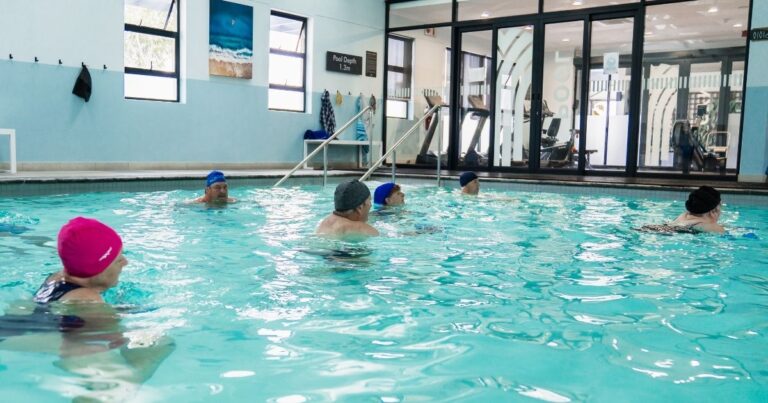
There is a reason the pool is where so many people rediscover exercise after years away from it, or after a joint replacement, or mid-way through an arthritis diagnosis that made the gym floor feel like enemy territory. Water changes the physics of movement, and the physics are the point.
Why Water Works
Buoyancy does the first half of the work. Immersed to chest or neck depth, the body bears a fraction of its land weight; deep immersion can reduce joint load by up to 90% compared with land-based exercise. That makes aquatic movement uniquely accessible for people managing arthritis, joint replacements or chronic pain: the joints are unloaded while the muscles still work.
The second half is resistance. Water is denser than air and resists movement in every direction, meaning every push, pull and step engages multiple muscle groups simultaneously. There is no equivalent on land: on the gym floor, gravity resists you in one direction only. In the pool, the workout surrounds you.
The combination is what makes aqua training unusual: genuinely challenging exercise with substantially lower injury risk than most alternatives.
What Regular Aqua Training Improves
Consistent water aerobics supports cardiovascular fitness, muscular endurance and strength. Warm water adds its own benefits: it is associated with reduced inflammation, improved circulation and lower blood pressure, which is part of why heated pools are the standard for older-adult programmes. Research finds that older adults participating in regular aquatic exercise programmes show significant improvements in balance and functional mobility, the two capacities most directly tied to staying independent.
For anyone managing arthritis specifically, the case is even stronger: warm-water exercise is one of the most consistently recommended interventions in rheumatology, precisely because it allows joints to move through range without load.
Pair the Pool With the Weights
Aqua training and weight-based resistance training for strength are not competitors; they are complements. Water excels at cardiovascular conditioning, endurance and joint-friendly movement. Weights excel at the one thing water cannot fully replicate: the progressive bone loading that maintains density and fights osteoporosis. Together they support the cardiovascular, skeletal and muscular systems simultaneously, across every fitness level and ability.
If you have to choose one starting point and your joints have opinions, start in the water. Build confidence and capacity there, then add land-based strength work as your body allows.
Getting Started
As with any new exercise programme, consult your doctor or biokineticist first, particularly if you manage a heart condition or are recovering from surgery. Then find a heated pool and a structured class; the group format matters more than people expect, both for technique and for the simple fact that classes you enjoy are classes you keep attending.
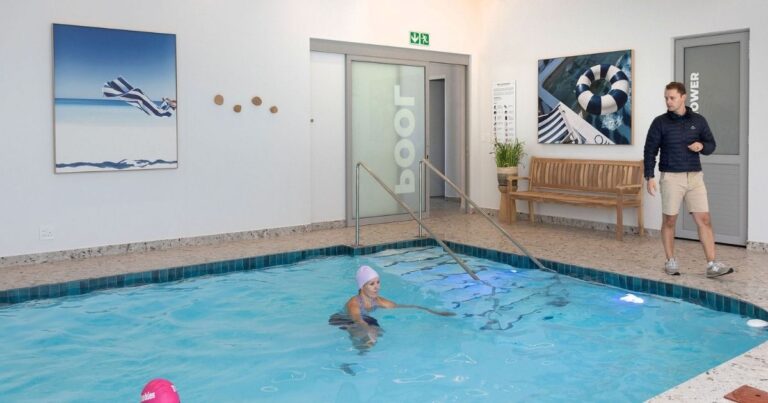
At Oasis Life Sunningdale, the new Wellness Centre includes a heated indoor aquasize pool, with classes run by the Wellness Redefined team, including Aqua Ignite, a resistance-based session combining cardio and strength work, and Aqua Revive, a low-impact recovery class that eases stiffness and supports the nervous system. Contact the Clubhouse for the current schedule. Oasis Life Burgundy Estate and Oasis Life Constantia also feature an indoor heated aerobics pool, while residents at Oasis Life Clara Anna Fontein enjoy a larger gym and lap lane pool for aerobic fitness.
The water has been undefeated as an exercise environment for several thousand years. It is not about to lose now.