

It doesn’t take a special qualification to know that supplements and systems promising wellbeing and longevity are in high demand. The evidence is on our screens, our social media feeds and the shelves of every health store. But even if the pills and powders have their place, the real answers may lie in something far simpler, and far more enjoyable.
What Are the Blue Zones?
When researcher and National Geographic Fellow Dan Buettner began exploring regions where people live significantly longer, healthier lives than average, he and his team marked those longevity hotspots on a map with blue circles. In the two decades since, the Blue Zones have shaped lifestyle medicine research and wellbeing initiatives around the world.
The five identified zones are Okinawa in Japan, Sardinia in Italy, Ikaria in Greece, Costa Rica’s Nicoya Peninsula and Loma Linda in California. In these communities, life expectancy often reaches the late 90s, rates of heart disease, diabetes and certain cancers are markedly lower, and reported happiness well into old age is markedly higher.
What the research revealed, in Buettner’s words, was a set of remarkably consistent lifestyle patterns.
What People in Blue Zones Actually Eat
The world’s longest-living people don’t diet or count calories. They eat simple, whole foods in moderation: largely plant-based meals built on seasonal vegetables, beans, whole grains, nuts and legumes. Meat is rare. Produce is often grown in personal or community gardens. Processed food barely features.
There are regional variations. Olive oil is the primary fat in the Mediterranean zones. Okinawa leans on sweet potatoes, tofu, vegetables and small amounts of fish. Nicoya is built on beans and corn. But every zone shares the same thread: whole, minimally processed, plant-forward eating.
Why How You Eat Matters as Much as What You Eat
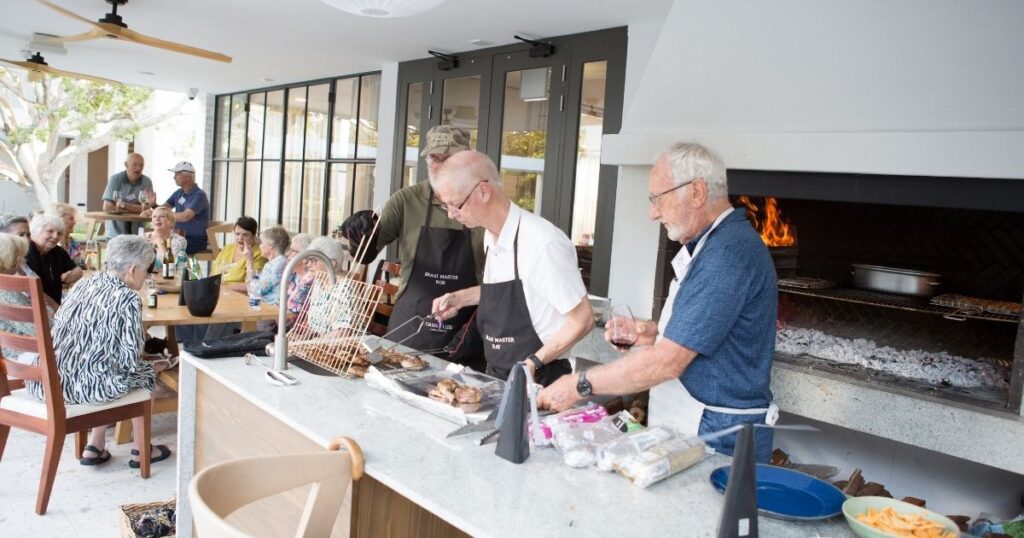
Buettner’s research revealed something beyond the plate. People in Blue Zones don’t just eat. They savour, socialise and slow down.
That matters because the state of mind we bring to the table has measurable effects. Eating slowly and attentively is associated with better digestion, greater satiety and healthier weight regulation. And the social dimension is not a nice-to-have: studies on socialisation and health have consistently found a connection between social eating and greater physical and emotional wellbeing. The Blue Zones embody this in their traditions of collective eating, from Ikaria’s long communal lunches to Sardinia’s family feasts to Okinawa’s moai friend circles.
The encouraging part: research suggests social eating can be as simple as sharing a meal with one other person, and that even two or three shared meals a week bring noticeable gains in connection and wellbeing.
The Pleasure Factor
In direct contrast to regimes built on restriction and biohacking, the Blue Zone approach to living is low on guilt and high on simple daily pleasure. Straight-from-the-garden vegetables, fresh bread with olive oil, homemade soup. Pleasure is an underrated biological regulator: it improves hormonal balance and digestion, not just mood.
A note on wine, since it comes up in every Blue Zones conversation: moderate wine with meals is part of daily life in Sardinia and Ikaria, but the most recent evidence on alcohol and health is contested, and major health bodies no longer describe any level of drinking as protective. Enjoy it as part of the culture of the table if you already do; don’t take it up for your health.
How to Create Your Own Mini Blue Zone
Start with a few plant-based, whole-grain meals a week and build from there: lentil soup, chickpea stew, minestrone, vegetable salads, stir-fries and casseroles. Reduce red meat to once a week or less, with oily fish two or three times a week. Cook from scratch where possible and buy seasonal produce. Grow something, even a pot of herbs on a windowsill. Swap processed snacks for nuts, fruit or yoghurt. Use olive oil as your primary fat.
Then borrow the habits that don’t fit in a shopping trolley. Eat slowly and make a point of enjoying the meal. Prioritise shared meals, even if that means one scheduled weekly lunch. Eat at a table rather than in front of a screen. If you live alone, set a beautiful table anyway, or start a supper club with friends where you take turns to host.
Longevity, it turns out, tastes considerably better than it sounds!


