

“We’ve been telling people to do less, at exactly the moment when doing more, safely and progressively, could change everything.”
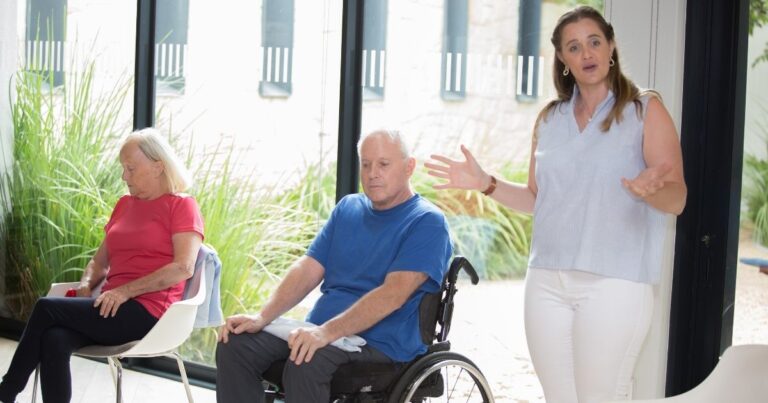
That observation comes from Sam, the registered biokineticist who leads the Wellness Redefined programme across Oasis Life estates. Having spent her career at the intersection of exercise, rehabilitation and chronic disease management, she noticed that much of the physical decline she witnessed in older adults was preventable. The research agrees with her.
What Happens to Muscle After 60
The natural decline in muscle mass, known as sarcopenia, accelerates after 60. Left unaddressed, it undermines almost everything else: bone density, metabolic health, balance, independence, even cognitive function. Strength, in later life, is not about aesthetics. It is the currency you spend on every daily task, from carrying groceries to getting off the floor.
Here is what makes sarcopenia unusual among the changes of ageing: it is substantially reversible. Strength, muscle mass and bone density all improve through resistance training at any age, including in people in their eighties and nineties. The window never closes.
What the Research Actually Shows
The evidence linking strength training to longer life is now robust, and worth stating precisely.
A 2022 study published in JAMA Network Open, analysing more than 115,000 adults aged 65 and over, found that those who did strength training at least twice a week had a lower risk of dying during the study period regardless of how much cardio they did; combined with regular aerobic exercise, the risk of dying during the study dropped by 30%. A 2021 review of 16 studies found that just 30 to 60 minutes of muscle-strengthening exercise a week was associated with a 10 to 17 percent lower risk of death from any cause. And research from King’s College London studying lifelong amateur cyclists aged 55 to 79 found their immune systems and muscle characteristics resembled those of much younger adults, in some immune measures comparable to people decades younger.
The consistent theme across all of it: intensity is not what makes the difference. Consistency is.
Beyond the Mortality Numbers
Regular resistance training strengthens the heart muscle, improves arterial flexibility and reduces resting blood pressure. It improves insulin sensitivity, supports metabolic function and is associated with reduced risk of type 2 diabetes, a condition whose prevalence rises significantly after 60.
Bone responds directly to load. Weight training places controlled stress on bones, stimulating the bone-forming cells that maintain density and reduce fracture risk. For those at risk of, or diagnosed with, osteopenia or osteoporosis, resistance training actively builds rather than merely preserves bone mass. And because falls are the leading cause of injury-related hospitalisation in older adults, the strength to catch yourself, or to get up again, is protective in the most literal sense.
How to Start Safely
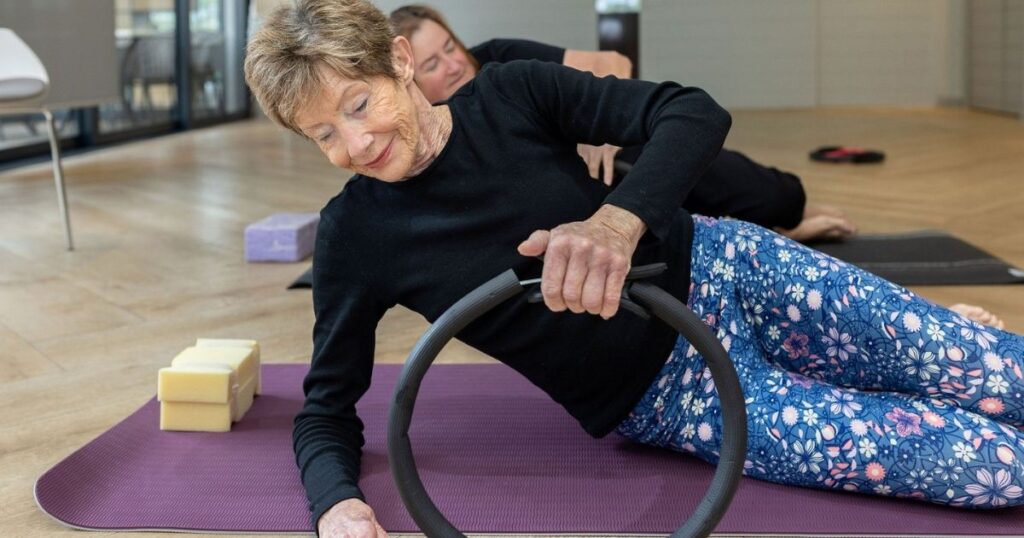
The principles are simple. Start supervised: a biokineticist or qualified trainer who works with older adults will screen your movement and build a progressive programme around your actual body, including any existing conditions. Start light and progress slowly; the adaptation happens between sessions, not during them. Train the big functional patterns: sit-to-stand, push, pull, carry. Twice a week is the evidence-backed minimum, and it is enough.
Consult your doctor or biokineticist before beginning a new exercise programme, particularly if you manage a chronic condition. Then begin anyway, because the alternative, doing less, is the one strategy the research clearly rules out.
At Oasis Life estates, the Wellness Redefined programme includes Empowered Strength, a progressive strength class for men and women over 60 focused on building muscle mass, bone density and confidence in a safe, structured environment. Contact your Clubhouse for the schedule.
Strength is the retirement fund nobody tells you about. It is also the only one that pays out immediately.
Read more in The Longevity Issue of Oasis Life Ripple Magazine, our quarterly lifestyle publication.


